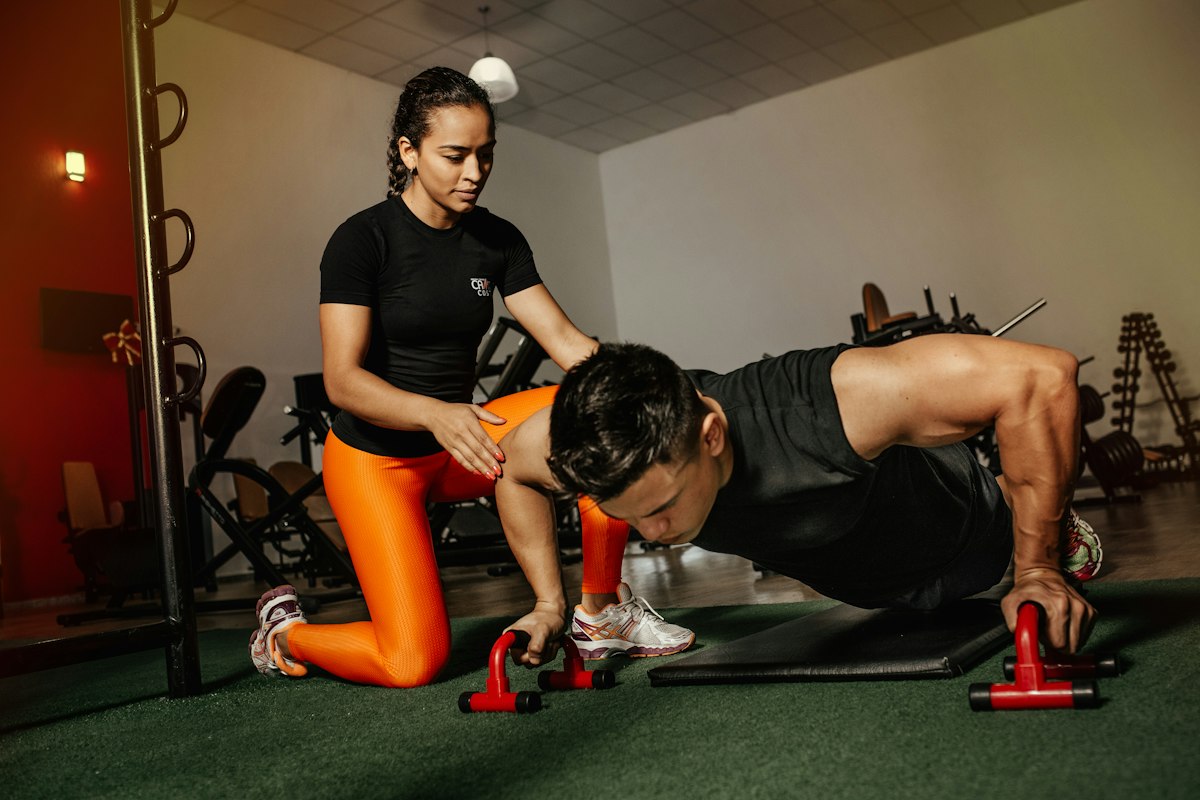
For years, the assumption was simple: if you want to build serious muscle, you need a gym. Barbells, machines, the whole setup. But that idea has aged poorly. Plenty of research now shows that bodyweight training, done right, builds real muscle — sometimes just as effectively as lifting weights, especially for beginners and intermediate lifters.
I know this firsthand. I haven't stepped foot in a gym in over four years. My living room, a pull-up bar in the doorway, and a single set of adjustable dumbbells have done more for my strength and physique than the years I spent paying for monthly memberships.
The truth is, your body doesn't care where the resistance comes from. Muscle fibers respond to mechanical tension, not whether that tension comes from a 50-pound dumbbell or your own body weight. The challenge with home workouts isn't the equipment — it's knowing what to do, how to progress, and avoiding the mistakes that keep beginners stuck.
This guide covers everything: the exercises, the science of progression, how to eat for muscle growth, the schedule that works, and the common pitfalls. By the end, you'll have a complete blueprint to build a stronger, more muscular body without ever paying a gym fee.
Quick note: Building visible muscle takes 3-6 months of consistent training for most people. Anyone promising "swole in 30 days" is selling something. Stick with it long-term and the results follow.
The Science: Can You Really Build Muscle at Home?
Yes — and the research backs this up. A 2017 study published in the journal Asian Journal of Sports Medicine compared groups doing bodyweight exercises versus those using weight machines. Both groups gained similar amounts of muscle and strength over 8 weeks.
The reason is something called mechanical tension. Your muscles grow when they're pushed near failure under load. The "load" can be:
- An external weight (dumbbells, barbells)
- Your bodyweight in difficult positions (one-arm push-ups, pistol squats)
- Bands, household items, or even partner resistance
If you push the muscle hard enough, it grows. Period. The challenge with bodyweight training is making the exercises progressively harder over time — but there are clear ways to do that, which we'll get into below.
The 5 Core Movement Patterns You Need to Train
Forget complex routines. Almost every muscle in your body can be trained through five basic movement patterns:
| Pattern | Muscles Worked | Main Exercises |
|---|---|---|
| Push (Horizontal) | Chest, shoulders, triceps | Push-ups and variations |
| Pull (Vertical) | Back, biceps | Pull-ups, inverted rows |
| Squat | Quads, glutes | Bodyweight squats, pistol squats |
| Hinge | Glutes, hamstrings | Glute bridges, single-leg deadlifts |
| Core | Abs, obliques, lower back | Planks, hollow holds, leg raises |
Train each pattern 2-3 times per week, focus on quality over quantity, and you'll cover every major muscle in your body.
The 12 Best Bodyweight Exercises for Building Muscle
1. Push-Ups (Chest, Shoulders, Triceps)
The king of upper body movements. Push-ups hit your chest, shoulders, triceps, and even your core. The basic form is just the start — there are dozens of variations to keep them challenging.
How to do them: Start in a plank position with hands slightly wider than shoulders. Lower your chest to about an inch above the floor, keeping your body straight. Push back up. Don't let your hips sag or stick up.
Progression path: Wall push-ups → Knee push-ups → Standard push-ups → Decline push-ups → Diamond push-ups → Archer push-ups → One-arm push-ups
2. Pull-Ups (Back, Biceps)
If you only get one piece of equipment, make it a doorway pull-up bar ($15-25 on Amazon). Pull-ups are unmatched for building a wide, strong back and bigger biceps.
How to do them: Hang from the bar with hands shoulder-width apart, palms facing away. Pull yourself up until your chin clears the bar. Lower with control.
Can't do one yet? Start with dead hangs (just holding the bar). Build up to negative pull-ups (jump up, lower slowly). Banded pull-ups are also great for building strength.
3. Bodyweight Squats (Quads, Glutes)
The foundation of lower body strength. Done right, with full depth and good control, they build serious leg muscle.
How to do them: Stand with feet shoulder-width apart, toes slightly out. Sit back and down, keeping your chest up and knees tracking over toes. Squat until thighs are parallel to the floor (or lower). Drive up through your heels.
Progression: Bodyweight squats → Bulgarian split squats → Jump squats → Pistol squats (single-leg)
4. Lunges (Legs, Glutes, Balance)
Lunges hit your legs from a different angle than squats and challenge your balance and core.
How to do them: Step forward with one leg. Lower until both knees are at about 90 degrees, your front thigh parallel to the floor. Push back to standing.
Variations: Walking lunges, reverse lunges, Bulgarian split squats (back foot elevated), jump lunges.
5. Inverted Rows (Back, Biceps)
If pull-ups feel too hard, inverted rows are the next best thing. You can do them under a sturdy table, between two chairs, or with a low bar.
How to do them: Lie under a sturdy bar or table edge. Grab it with hands shoulder-width apart. Keep your body straight and pull your chest to the bar. Lower with control.
Pro tip: The lower the bar, the harder the exercise. Feet elevated makes it harder still.
6. Dips (Triceps, Chest, Shoulders)
Find two sturdy chairs facing each other, or use a sturdy single chair for triceps dips.
How to do them: Place hands on a chair behind you, fingers gripping the edge. Slide your butt off, legs straight in front. Lower your body by bending elbows until upper arms are parallel to the floor. Push back up.
Harder version: Elevate your feet on another chair. Even harder: parallel bar dips (if you have access).
7. Glute Bridges (Glutes, Hamstrings, Core)
Lower body work that's easy on the back and joints. Great for activating the glutes — which sit dormant in most people who sit all day.
How to do them: Lie on your back, knees bent, feet flat. Drive your hips up by squeezing your glutes. Hold at the top for a second. Lower slowly.
Progression: Two-leg → Single-leg → Hip thrust (shoulders elevated on a couch) → Weighted versions.
8. Planks (Core)
The most effective ab exercise that doesn't strain your spine. Builds deep core strength that supports every other movement.
How to do them: Forearms on the floor, body in a straight line from head to heels. Squeeze your glutes and abs. Hold without sagging or arching.
Variations: Side plank, plank with shoulder taps, plank with leg lifts, RKC plank (extra tense).
9. Hollow Body Holds (Core)
Gymnasts use this to build incredible core strength. Looks easy, isn't.
How to do them: Lie on your back. Arms extended overhead, legs straight. Lift shoulders, arms, and legs off the floor a few inches. Press your lower back firmly into the floor. Hold.
10. Pike Push-Ups (Shoulders)
The closest thing to overhead press without weights. Builds serious shoulder strength.
How to do them: Start in a downward dog position — feet on floor, hands on floor, hips piked up high. Lower your head toward the floor between your hands. Push back up.
Progression: Elevated pike push-ups (feet on chair) → Wall handstand push-ups → Free-standing handstand push-ups.
11. Bulgarian Split Squats (Legs, Glutes)
One of the most effective single-leg exercises. Builds glute strength and fixes muscle imbalances between legs.
How to do them: Stand a few feet in front of a chair or bench. Place the top of your back foot on the chair. Lower down into a lunge until your front thigh is parallel to the floor. Push back up.
12. Burpees (Full Body, Cardio)
The single most efficient bodyweight exercise. Combines a squat, plank, push-up, and jump into one movement. Builds muscular endurance and burns calories.
How to do them: Stand. Drop down, hands on floor. Jump feet back to plank. (Optional push-up.) Jump feet forward. Stand and jump. Repeat.
The Key to Building Muscle at Home: Progressive Overload
This is where most beginners get stuck. They do the same workout for months and wonder why nothing's changing. Your muscles adapt to challenges by getting stronger. If the challenge stays the same, growth stalls.
With bodyweight training, you can't just "add more weight." But you have plenty of other ways to make exercises harder:
1. Add Reps
If you can do 15 push-ups today, aim for 20 next week. Once you hit 25-30, it's time to move to a harder variation.
2. Slow the Tempo
A push-up done with a 4-second lowering and 1-second up is way harder than fast push-ups. Try 3-1-3 (3 sec down, 1 sec pause, 3 sec up).
3. Increase Sets
Go from 3 sets to 4 sets. Then 5. Just make sure each set is challenging.
4. Decrease Rest
If you currently rest 90 seconds between sets, try 60. Then 45. Less rest = more total time under tension.
5. Progress to Harder Variations
Once a movement feels easy, switch to its harder version. Standard push-ups → decline push-ups → archer push-ups → one-arm push-ups.
6. Add Pauses
Pause at the bottom of every squat for 2 seconds. Pause at the top of every pull-up. Eliminate momentum.
7. Use Unilateral Variations
Two legs become one. Two arms become one. Suddenly the same bodyweight feels much heavier.
The 4-Day Home Workout Schedule
This routine alternates upper and lower body to give muscles 48+ hours to recover.
Day 1 — Upper Body
- Push-ups: 4 sets of 8-15 reps
- Pull-ups or inverted rows: 4 sets of 6-10 reps
- Pike push-ups: 3 sets of 8-12 reps
- Dips: 3 sets of 8-12 reps
- Plank: 3 sets of 30-60 seconds
Day 2 — Lower Body
- Bodyweight squats: 4 sets of 12-20 reps
- Bulgarian split squats: 3 sets of 8-12 reps per leg
- Glute bridges: 4 sets of 15-20 reps
- Lunges: 3 sets of 10-12 per leg
- Calf raises: 4 sets of 20 reps
Day 3 — Rest or Light Cardio
Day 4 — Upper Body (Varied)
- Decline push-ups: 4 sets of 8-12 reps
- Pull-ups (different grip): 4 sets of 6-10 reps
- Diamond push-ups: 3 sets of 8-12 reps
- Inverted rows: 3 sets of 10-15 reps
- Hollow body holds: 3 sets of 20-40 seconds
Day 5 — Lower Body (Varied)
- Jump squats: 4 sets of 10 reps
- Single-leg glute bridges: 3 sets of 10 per leg
- Reverse lunges: 3 sets of 10 per leg
- Wall sit: 3 sets of 45-60 seconds
- Side planks: 3 sets of 30 seconds each side
Days 6 & 7 — Rest or Activity
Walk, hike, play sports, stretch. Active recovery beats lying around.
Nutrition: The 70% of Muscle Building Nobody Talks About

You can do the perfect workout routine and see zero muscle growth if you don't eat right. Muscle is literally built from food. Here's the basics:
1. Eat Enough Protein
Aim for 0.7 to 1 gram of protein per pound of bodyweight daily. For a 150 lb person, that's 105-150g of protein. Without this, muscle growth slows dramatically.
Good sources:
- Chicken breast (25g per 3 oz)
- Eggs (6g each)
- Greek yogurt (17g per cup)
- Lentils (18g per cooked cup)
- Cottage cheese (28g per cup)
- Tofu, tempeh, beans
- Whey or plant protein powders if needed
2. Eat Enough Calories
You can't build muscle in a major calorie deficit. To gain muscle, eat at a small surplus — about 200-300 calories above maintenance daily. For most adults, that's 2,500-3,000+ calories.
If you're trying to lose fat and build muscle simultaneously (called "body recomposition"), eat at maintenance with very high protein. This works best for beginners.
3. Don't Neglect Carbs and Fats
Carbs fuel workouts. Fats balance hormones. A typical breakdown for muscle building:
- 30% calories from protein
- 40% from carbs
- 30% from fats
4. Hydrate
Muscle tissue is 75% water. Aim for 3+ liters of water daily, more if you're sweating a lot.
Recovery: The Other Half of Muscle Growth
Muscles don't grow during workouts. They grow when you rest. Skip recovery and your gains stall.
1. Sleep 7-9 Hours
Growth hormone peaks during deep sleep. Less than 7 hours and your body produces less, recovers less, and grows less. This is non-negotiable.
2. Take Rest Days
Train each muscle group 2-3 times per week, never daily. The 48 hours between sessions is when actual growth happens.
3. Stretch and Mobility Work
5-10 minutes of stretching after workouts speeds recovery and reduces injury risk. Yoga or simple dynamic stretches work great.
4. Manage Stress
Chronic stress raises cortisol, which breaks down muscle. Walks, meditation, time in nature — all help.
Common Mistakes That Stall Progress
1. Not Pushing to Near-Failure
If you stop sets when you "feel tired" instead of when you literally can't do another rep with good form, you're leaving growth on the table.
2. Bad Form
Half-rep push-ups, partial squats, bouncing pull-ups — these feel productive but barely work the muscles. Slow down and do full range of motion.
3. Inconsistency
2 weeks on, 1 week off doesn't build muscle. You need 4-6 days a week of training for at least 3 months to see real changes.
4. Eating Too Little Protein
Vegans, casual eaters, and weight-loss focused people often eat 50-80g of protein daily. That's not enough to build muscle.
5. Doing Cardio All the Time
Cardio is great for heart health and fat loss, but excessive cardio interferes with muscle growth. Limit it to 2-3 sessions per week while in a building phase.
6. Comparing Yourself to Gym Bros
Bodyweight training builds lean, functional muscle. You probably won't look like a bodybuilder — you'll look like an athletic, capable person. That's a win, not a failure.
Frequently Asked Questions
How long until I see results?
First strength gains: 2-3 weeks. Visible muscle changes: 6-12 weeks. Significant transformation: 6+ months of consistent work.
Can I build big muscles without weights?
You can build impressive, athletic, strong muscles. To reach competitive bodybuilder size, you'll eventually need external weights. But most people's "goal physique" is achievable with bodyweight alone.
How many days a week should I train?
4-5 days a week is the sweet spot. Less than 3 means slow progress. More than 6 risks burnout and overuse injury.
Should I do cardio if I'm building muscle?
Yes, but limit it to 2-3 short sessions per week (20-30 minutes each). Walking daily is great and doesn't interfere with muscle growth.
What if I can't do a single pull-up?
Start with dead hangs (10-30 seconds), then move to negative pull-ups (jump up, lower slowly). Banded pull-ups also help. Most people can build to their first pull-up within 4-8 weeks.
Do I need protein powder?
Not required, but useful. If you struggle to hit your protein goal through food alone, a scoop or two of whey or plant protein daily can fill the gap.
Can women build muscle this way?
Absolutely. Women build muscle through the same principles — just at slightly slower rates because of lower testosterone levels. Don't worry about "bulking up" by accident.
What about getting visible abs?
Abs are made in the kitchen. You can have the strongest core in the world, but you won't see it under body fat. Reduce body fat to about 12-15% (men) or 18-22% (women) and abs will show.
Should older adults try this?
Definitely. Bodyweight training is even more important as you age — it preserves muscle mass, prevents falls, and maintains independence. Just modify intensity to match your current ability.
The Bottom Line
The gym isn't required to build a strong, muscular body. Your own bodyweight, used intelligently with progressive overload, will get you most of the way there. Pair that with enough protein, consistent sleep, and 4-5 sessions per week, and you have everything you need.
Start tomorrow. Pick three exercises — push-ups, squats, and planks. Do them for 30 days. By the end, you'll be doing more reps with better form, and you'll have built a habit that pays off for years.
The hardest part of any fitness journey isn't the workout. It's showing up consistently when motivation runs out. A home gym makes that easier — no commute, no commute, no excuses. The barbell at the gym never knew your name anyway.
Your living room. Your body. Real results. That's it.