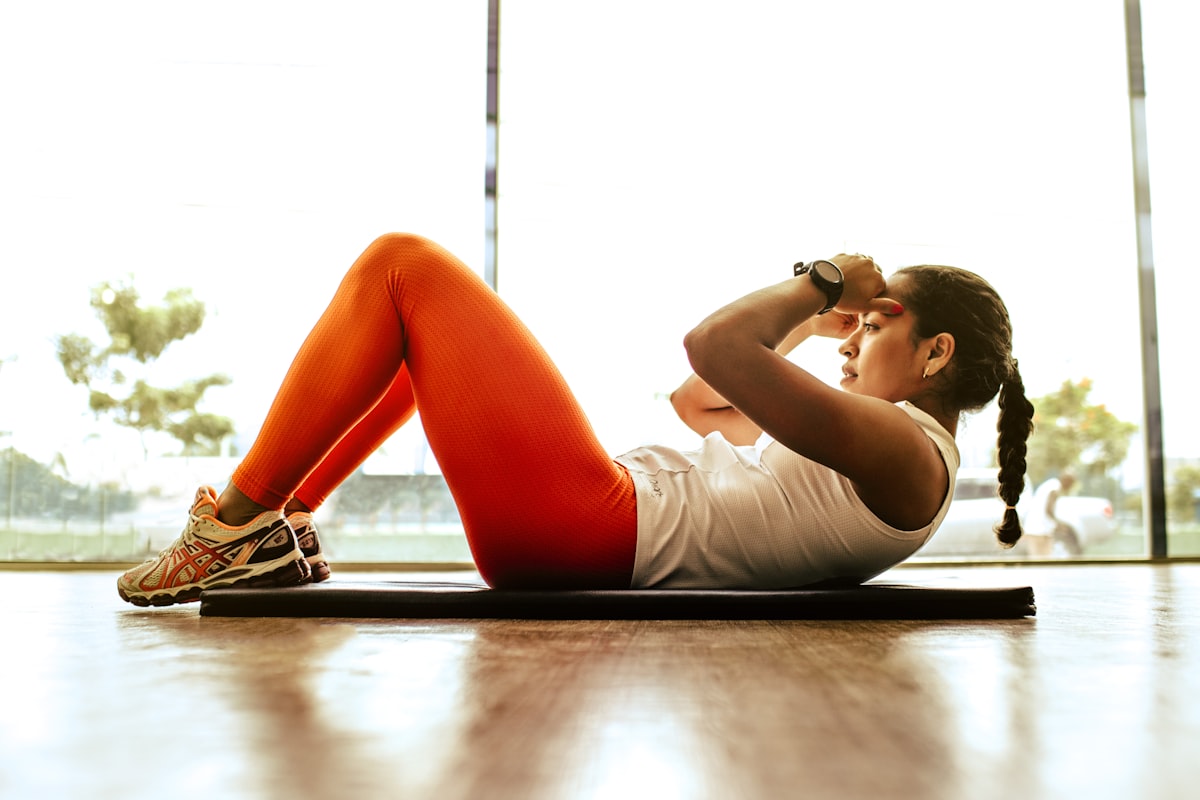
The promise of a flat stomach has launched a thousand fitness products — ab rollers, electric stimulators, "miracle" belts, and endless 30-day challenges. Most of them don't work, or they work way less than advertised. Here's why:
Your abs are already there. Every person reading this has abdominal muscles — they're just hiding under a layer of body fat. The actual formula for a strong, flat stomach is simpler than most fitness brands want you to believe: build the muscles underneath, and lower the body fat covering them.
The exercises in this guide focus on the first half — building real core strength that translates into a tighter, more defined midsection. The good news is most of them require zero equipment, take 10-20 minutes a day, and target every layer of your abs (most people only train one or two of the four).
Done consistently for 30 days, paired with reasonable nutrition, you'll feel noticeable changes. Done for 90 days, you'll see them too.
Real talk first: No amount of crunches will burn belly fat alone. Spot reduction isn't a real thing. You build core muscles with the exercises below — but visible abs require fat loss through diet and overall activity. Both pieces matter.
Your Core Isn't Just Your Abs (And Why That Matters)
When most people say "core," they think of the visible six-pack muscle on the front. But the core is actually a complex group of muscles:
- Rectus abdominis: The "six-pack" muscle that runs vertically down your stomach
- External obliques: Side muscles that help with rotation and bending
- Internal obliques: Deeper side muscles that also assist rotation
- Transverse abdominis: The deepest layer, like a built-in corset — most important for true core strength
- Erector spinae: Lower back muscles that work with abs to keep your spine stable
- Hip flexors and glutes: Connected to the core through the pelvis
Most people only train the front (rectus abdominis) with crunches. That's why they have decent abs but poor core function. The exercises below target all four ab muscles plus the supporting structures, which is what gives you a strong, flat, defined midsection.
Quick Reference: 15 Best Core Exercises
| # | Exercise | Difficulty | Main Target |
|---|---|---|---|
| 1 | Plank | Beginner | Entire core |
| 2 | Bicycle Crunches | Beginner | Abs + obliques |
| 3 | Dead Bug | Beginner | Deep core |
| 4 | Russian Twists | Beginner | Obliques |
| 5 | Mountain Climbers | Beginner | Core + cardio |
| 6 | Side Plank | Beginner | Obliques |
| 7 | Hollow Body Hold | Intermediate | Entire core |
| 8 | Leg Raises | Intermediate | Lower abs |
| 9 | V-Ups | Intermediate | Upper + lower abs |
| 10 | Plank with Shoulder Taps | Intermediate | Anti-rotation core |
| 11 | Flutter Kicks | Intermediate | Lower abs |
| 12 | Bird Dog | Beginner | Stability core |
| 13 | Toe Touches | Intermediate | Upper abs |
| 14 | Reverse Crunches | Intermediate | Lower abs |
| 15 | Hanging Knee Raises | Advanced | Lower abs |
The 15 Best Core Exercises Explained
1. Plank
The single most effective core exercise out there. Hits every muscle in your midsection plus shoulders and glutes — and unlike crunches, it doesn't strain your neck or lower back.
How to do it: Get into a forearm plank position. Elbows under shoulders, body in a straight line from head to heels. Squeeze glutes and abs. Don't let your hips sag or stick up.
Goal: Build to 60 seconds with perfect form. Beyond that, switch to harder variations (single-leg plank, plank with shoulder taps).
2. Bicycle Crunches
Ranked #1 by the American Council on Exercise for core muscle activation. Hits the rectus abdominis and obliques at the same time.
How to do it: Lie on your back, hands behind head, knees bent. Lift shoulders off floor. Bring right elbow to left knee while extending right leg. Switch sides. Move slowly and squeeze through each rotation.
Common mistake: Yanking on your neck. Hands are there to support, not pull.
3. Dead Bug
Don't let the funny name fool you — this is one of the most effective deep core exercises and a favorite of physical therapists.
How to do it: Lie on your back. Bend knees 90°, arms straight up. Slowly lower your right arm overhead and left leg toward the floor at the same time. Return. Switch sides.
Key: Press your lower back firmly into the floor the entire time. If your back arches, you're doing it wrong.
4. Russian Twists
The go-to exercise for sculpting obliques (the side muscles that create that V-taper look).
How to do it: Sit on the floor, knees bent. Lean back about 45°. Lift feet off the floor (or keep them down for easier version). Twist your torso side to side, tapping the floor on each side.
Make it harder: Hold a water bottle or any weight at chest level.
5. Mountain Climbers
Combines core work with cardio. Burns calories while strengthening abs — exactly what you want for fat loss + muscle building.
How to do it: Start in high plank. Drive one knee toward your chest, then quickly switch. Keep hips low and steady. Move fast for cardio benefit.
6. Side Plank
The plank's lesser-known cousin, but just as important. Strengthens the obliques and the often-neglected deeper core stabilizers.
How to do it: Lie on your side. Prop yourself up on your forearm, elbow under shoulder. Stack feet. Lift hips so your body forms a straight line. Hold.
Modification: Drop the bottom knee to the floor for support.
7. Hollow Body Hold
Gymnasts use this to build phenomenal core strength. Looks easy. Isn't.
How to do it: Lie on your back. Arms extended overhead, legs straight. Lift shoulders, arms, and legs slightly off the floor. Press your lower back firmly into the floor. Hold for 20-45 seconds.
Why it works: Trains your core to stay tight under tension — exactly how the abs function in real life.
8. Leg Raises
The best exercise for the lower abs, which most other moves don't hit well.
How to do it: Lie on your back, legs straight. Place hands under your hips or by your sides for support. Slowly raise legs to vertical, then lower with control. Don't let your feet touch the floor between reps.
Easier version: Bend your knees. Even easier: lift one leg at a time.
9. V-Ups
Hits both upper and lower abs in one explosive movement. Tough but effective.
How to do it: Lie flat on your back, arms extended overhead. Simultaneously lift your legs and torso, reaching your hands toward your toes to form a V shape. Lower with control.
10. Plank with Shoulder Taps
Adds an anti-rotation element to the plank — your core has to work hard to keep your hips from twisting.
How to do it: Start in a high plank. Without rocking your hips, lift one hand to tap the opposite shoulder. Return. Alternate sides.
Key: The slower you do it, the harder it is. Don't rush.
11. Flutter Kicks
Burns the lower abs like nothing else. Looks easy at first, gets brutal fast.
How to do it: Lie on your back. Place hands under your hips for support. Lift legs a few inches off the floor. Rapidly flutter them up and down, alternating, in small movements.
12. Bird Dog
One of the best exercises for core stability and lower back health. PTs recommend it for everyone.
How to do it: Start on hands and knees. Extend your right arm forward and left leg back simultaneously, keeping your back flat. Hold 2 seconds. Return. Switch sides.
13. Toe Touches
Targets the upper abs and squeezes the rectus abdominis hard. Great alternative to traditional crunches.
How to do it: Lie on your back. Legs straight up toward the ceiling. Reach hands up and try to touch your toes by lifting your shoulders off the floor. Lower with control.
14. Reverse Crunches
Better than regular crunches for hitting the lower abs and easier on the neck.
How to do it: Lie on your back, knees bent at 90°. Place hands by your sides or under your hips. Use your lower abs to lift your hips off the floor, bringing your knees toward your chest. Lower with control.
15. Hanging Knee Raises (Advanced)
If you have a pull-up bar, hanging knee raises are gold for lower ab development. They also strengthen your grip and shoulders.
How to do it: Hang from a pull-up bar with arms straight. Slowly bring your knees up toward your chest. Lower with control. No swinging.
Progression: Hanging knee raises → Hanging leg raises (straight legs) → Hanging toes-to-bar.
The 30-Day Core Workout Plan
This is a structured plan that progressively challenges your core over four weeks. Do these workouts 4-5 times per week, with at least one rest day between back-to-back sessions.
Week 1: Foundation (Build the Basics)
Do 3 rounds with 30 seconds rest between exercises:
- Plank — 30 seconds
- Bicycle crunches — 20 reps (10 per side)
- Dead bug — 16 reps (8 per side)
- Side plank — 20 seconds each side
- Bird dog — 12 reps (6 per side)
Week 2: Step Up
Do 3 rounds with 20 seconds rest:
- Plank — 45 seconds
- Russian twists — 30 reps
- Leg raises — 12 reps
- Mountain climbers — 30 seconds
- Flutter kicks — 30 seconds
Week 3: Real Challenge
Do 4 rounds with 15 seconds rest:
- Hollow body hold — 30 seconds
- V-ups — 12 reps
- Plank with shoulder taps — 30 seconds
- Reverse crunches — 15 reps
- Side plank — 40 seconds each side
Week 4: Full Burn
Do 4 rounds with 10 seconds rest:
- Plank — 60 seconds
- Bicycle crunches — 30 reps
- V-ups — 15 reps
- Mountain climbers — 45 seconds
- Hollow body hold — 40 seconds
- Toe touches — 15 reps
The Other Half: Why You Need Fat Loss for Visible Abs
Here's the part nobody on TikTok wants to talk about: even the world's strongest core won't show abs if it's covered by body fat. To see definition, men generally need to be around 10-15% body fat, women around 17-23%.
That means your diet matters more than your workout for visible abs. Specifically:
- Eat in a moderate calorie deficit — about 300-500 calories less than maintenance daily
- Get enough protein — 0.7-1g per pound of body weight
- Cut sugary drinks and ultra-processed foods — they're packed with empty calories
- Eat plenty of fiber-rich vegetables — they fill you up without adding calories
- Drink water, not soda — easy 200+ calorie daily savings
Combine the core workouts with these habits, and you'll see results within 4-8 weeks for most people.
The Cardio Question
Cardio isn't strictly necessary for visible abs, but it speeds up fat loss. Aim for:
- 3-4 days a week of moderate cardio (brisk walking, jogging, cycling) — 30 minutes
- OR 2-3 days a week of HIIT — 15-20 minutes (more efficient if you're short on time)
- OR 10,000+ steps daily — adds up without feeling like a workout
Add cardio after core work or on alternate days. Don't replace the strength work with cardio — that's a recipe for losing both fat and muscle.
Common Mistakes That Stall Progress
1. Doing Only Crunches
Crunches hit one muscle out of four. Diversify with planks, leg raises, and oblique work.
2. Bad Form
Yanking on your neck during crunches, letting hips sag during planks, swinging during leg raises — bad form makes everything less effective and risks injury.
3. Inconsistency
2 weeks of training + 2 weeks off = nothing. 4-5 days a week, every week, for at least 30 days is the bare minimum.
4. Ignoring Nutrition
You can't out-train a bad diet. Period.
5. Expecting Miracle Results in 1 Week
Real changes take 3-4 weeks minimum to show. Bigger transformations take 8-12 weeks. Don't quit early.
6. Working Abs Daily Without Rest
Muscles grow during recovery. 4-5 days a week is plenty.
Frequently Asked Questions
Will these exercises give me a six-pack?
They'll build the muscles needed. Whether they're visible depends on your body fat percentage. Most men need to be under 12% body fat, women under 20%.
How long until I see results?
Strength gains: 2-3 weeks. Improved muscle tone: 4-6 weeks. Visible abs: 8-16 weeks depending on starting body fat.
Can I do these every day?
Not all of them. Train core 4-5 days a week with at least one rest day. Daily light core work (planks, dead bugs) is fine.
Are crunches bad for your back?
Done correctly with light volume, no. But excessive crunches can strain the spine. Mix in plenty of plank-based and anti-rotation exercises instead.
Will I lose belly fat by doing crunches?
No. Spot reduction isn't real. Crunches build the muscle underneath, but the fat covering it has to come off through overall calorie deficit and activity.
Should I use a weighted vest or hold weights?
Once bodyweight exercises feel easy, adding light weight (a water bottle, small dumbbell) can challenge muscles more. Don't add too much weight too fast.
How important is sleep for ab development?
Very. Poor sleep raises cortisol, which promotes belly fat storage. Aim for 7-9 hours nightly.
Are ab "fat-burning" pills worth it?
No. They're either ineffective, dangerous, or both. The "fat burning" boost is usually just caffeine. Save your money.
Should women avoid heavy core work?
Not at all. Women benefit from strong cores just as much as men — for posture, function, and yes, aesthetics. The "bulky waist" fear is unfounded.
The Bottom Line
A strong, flat stomach isn't built in a day, but it's also not as complicated as fitness influencers make it sound. The 15 exercises in this guide cover every muscle of your core. The 30-day plan structures progressive challenge. Pair it with sensible eating and a few hours of weekly cardio, and you have a complete formula that works.
Start tomorrow. Do Week 1's workout. Don't worry about being perfect — worry about showing up. By the end of the month, your core will be stronger, your posture better, your clothes fitting differently, and you'll be ready to take on harder challenges.
The abs are already there. Your job is to build them up and reveal them. Patience, consistency, and the right approach — that's the whole game.