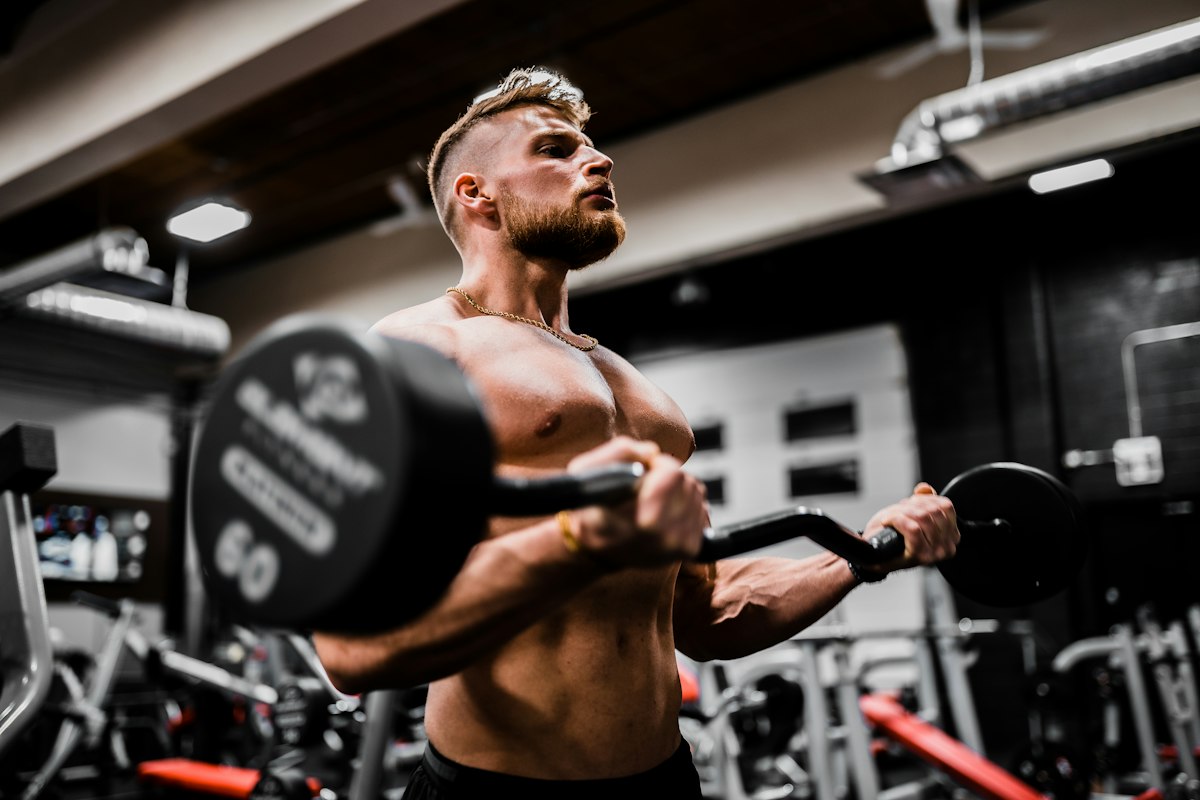
If you've ever walked into a gym and felt like everyone there spoke a foreign language — "drop sets," "RPE," "progressive overload," "compound lifts" — you're not alone. The strength training world has its own vocabulary, and it can make a complete beginner feel like they need a translator before they're allowed to lift a single dumbbell.
Here's the truth nobody tells beginners: strength training is much simpler than it looks. Underneath all the jargon, it comes down to a handful of basic movements done with progressively heavier resistance over time. That's it. The rest is just details.
This guide is the one I wish I'd had when I started lifting in my mid-20s. I'll cover what strength training actually is, why it's the single best form of exercise for most adults, the basic movements you need to learn, exactly how to start (with or without a gym), and the mistakes that derail most beginners. By the end, you'll have a clear, no-nonsense path to your first month of training.
No fluff, no "lifestyle" preaching, no protein powder ads. Just the basics that work.
Heads up: If you have heart issues, joint problems, or are recovering from injury, talk to your doctor before starting. Otherwise, you don't need permission to begin. You don't even need a gym membership.
What Strength Training Actually Is
Strength training (also called resistance training) is any activity where your muscles work against a force to grow stronger. The force can come from:
- Your own bodyweight (push-ups, squats, lunges)
- Dumbbells or barbells
- Resistance bands
- Kettlebells
- Cable machines at a gym
- Even household items (water jugs, backpacks loaded with books)
Your muscles don't care about the source. They respond to one thing: tension challenging them to adapt. Apply enough tension, recover properly, eat enough protein, and your muscles get stronger and slightly bigger.
That's the entire science in one paragraph.
Why You Should Strength Train (Even If "Bulking Up" Isn't Your Goal)
Strength training has the strongest research backing of any form of exercise for health outcomes — and most of the benefits have nothing to do with looking muscular.
1. Stronger Muscles = Easier Daily Life
Carrying groceries, climbing stairs, lifting kids, getting up off the floor — all of these become noticeably easier within weeks of consistent training. The "I'm just getting older" excuse usually has more to do with muscle loss than actual aging.
2. Better Bone Density
Lifting weights stimulates bones to grow stronger. This is critical as you age — strength training reduces osteoporosis risk significantly, especially for women.
3. Boosted Metabolism
Muscle tissue burns calories even when you're sitting still. Every pound of muscle you add increases your daily calorie burn slightly. Over time, this adds up to substantial fat loss benefits.
4. Better Posture and Less Pain
Most chronic back, neck, and shoulder pain comes from weak muscles failing to support the spine. A few months of consistent strength work fixes more pain issues than any massage or chiropractor session.
5. Mental Health Benefits
Research published in JAMA Psychiatry shows strength training reduces symptoms of depression and anxiety as effectively as some medications. The confidence boost from getting stronger spills into every area of life.
6. Longer, Healthier Life
Multiple long-term studies link grip strength and muscle mass directly to lifespan. Stronger people simply live longer and stay independent later.
7. Better Sleep
Resistance training improves sleep quality and helps with insomnia in many studies.
8. Improved Insulin Sensitivity
Strength training is one of the most effective non-medication ways to manage and prevent type 2 diabetes.
The 6 Movement Patterns That Cover Everything
Forget complicated routines. Every effective strength program is built around 6 basic movement patterns. Master these, and you've got the foundation for any future training.
| Pattern | Main Exercises | Muscles Trained |
|---|---|---|
| Squat | Bodyweight squat, goblet squat | Quads, glutes, core |
| Hinge | Romanian deadlift, glute bridge | Glutes, hamstrings, back |
| Push (Vertical) | Overhead press, pike push-up | Shoulders, triceps |
| Push (Horizontal) | Push-up, bench press | Chest, shoulders, triceps |
| Pull | Dumbbell row, pull-up | Back, biceps |
| Carry / Core | Farmer's carry, plank | Core, grip, full body |
Every workout you do should include movements from most of these patterns. That's it. No need for 47 different exercises.
The 9 Best Beginner Strength Exercises
1. Bodyweight Squat
The foundation of all leg work. Builds your quads, glutes, hamstrings, and core all at once.
How to do it: Stand with feet shoulder-width apart, toes slightly out. Push your hips back as if sitting in a chair. Lower until your thighs are at least parallel to the floor. Drive up through your heels.
Key form points: Chest up, back straight, knees tracking over toes, weight in heels.
2. Goblet Squat (with a dumbbell or kettlebell)
Once bodyweight squats feel easy, hold a dumbbell at your chest for added resistance.
How to do it: Hold a single dumbbell vertically at your chest with both hands. Squat exactly like the bodyweight version.
3. Push-Up
The king of upper body bodyweight exercises. Builds your chest, shoulders, triceps, and core.
How to do it: Plank position with hands slightly wider than shoulders. Lower your chest toward the floor, keeping your body straight. Push back up.
Beginner mod: Start with wall push-ups, then incline push-ups (hands on a counter), then knee push-ups, then full push-ups.
4. Dumbbell Row
The best beginner back exercise. Strengthens your back, biceps, and posture muscles.
How to do it: Place your left knee and left hand on a bench (or sturdy chair). Right foot on floor. Hold a dumbbell in your right hand. Row it up to your hip, keeping your back flat. Lower with control.
5. Glute Bridge
One of the best beginner exercises for activating glutes — which sit dormant in most people who sit at desks.
How to do it: Lie on your back, knees bent, feet flat on floor. Drive hips up by squeezing glutes. Pause at top. Lower with control.
6. Romanian Deadlift (RDL)
Teaches the hip hinge — the foundation for all hamstring and glute training. Critical for protecting your lower back during daily activities.
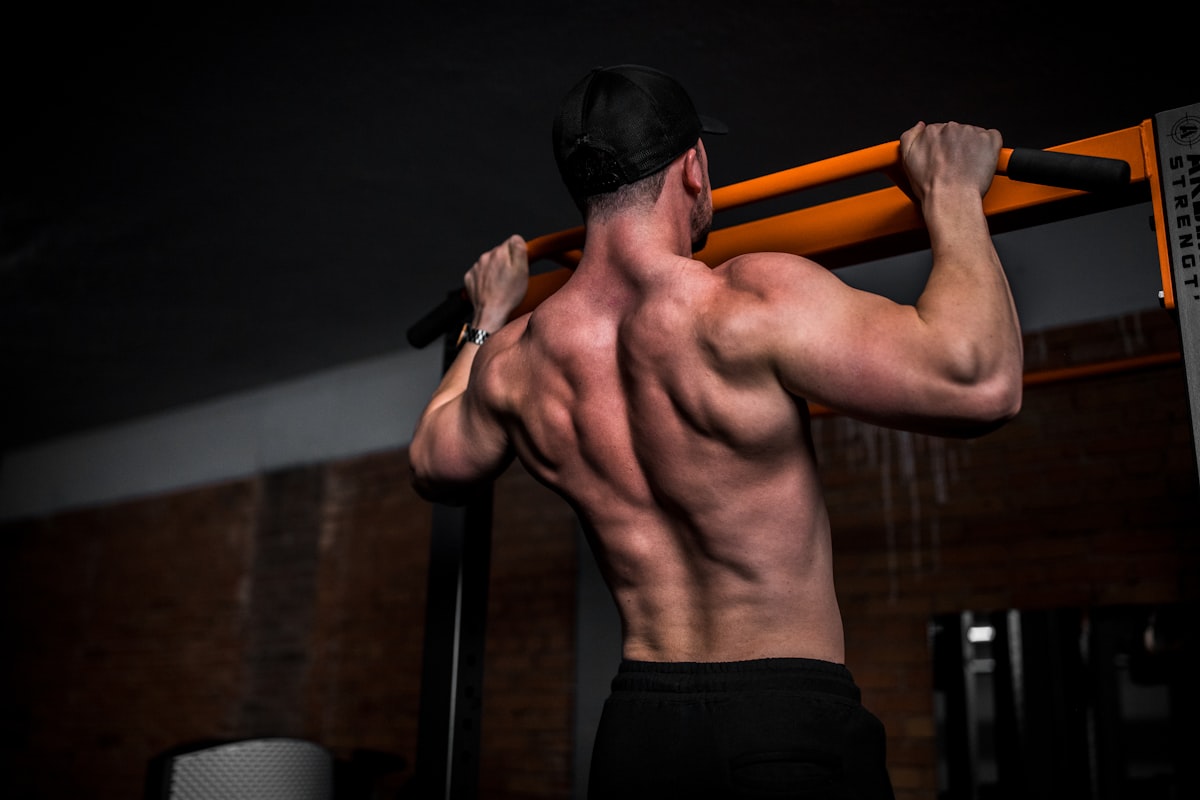
How to do it: Hold dumbbells in front of your thighs. Push hips back (not down), letting the dumbbells slide down your legs. Stop when you feel a stretch in your hamstrings. Drive hips forward to return to standing.
7. Overhead Press
Builds shoulder strength and helps with everyday tasks like putting things on high shelves.
How to do it: Stand holding dumbbells at shoulder height, palms facing forward. Press them straight overhead until arms are fully extended. Lower with control.
8. Lunge
Single-leg work that builds balance, fixes muscle imbalances, and hits the quads and glutes hard.
How to do it: Step forward with one leg. Lower until both knees are at 90 degrees. Push back to standing. Alternate legs.
9. Plank
The single best core exercise. No crunches needed.
How to do it: Forearms on the floor, body in a straight line from head to heels. Hold while breathing normally.
Sets, Reps, and Weight: The Numbers That Matter
This confuses every beginner. Let me make it simple.
What Are Sets and Reps?
- Rep (repetition): One complete motion of an exercise — one push-up, one squat.
- Set: A group of reps performed together before resting. "3 sets of 10 reps" means doing 10 reps, resting, doing 10 more, resting, doing 10 more.
How Many Reps Should Beginners Do?
For most beginners, the sweet spot is 8-12 reps per set. This range builds muscle, develops good form, and lets you learn the movements safely.
How Many Sets?
Start with 2-3 sets per exercise. As you get fitter, you might bump that to 3-4. More than 4 sets per exercise rarely gives extra benefit for beginners.
How Much Weight?
Use a weight where the last 2-3 reps of each set feel hard but you can still complete them with good form. If you can easily do 15+ reps, the weight's too light. If you can barely do 5, it's too heavy.
Rest Between Sets
For strength: 1-2 minutes between sets.
For endurance/circuit-style: 30-45 seconds.
Don't skip rest. Your muscles need it to perform well in the next set.
The Magic Word: Progressive Overload
This is the single most important concept in strength training, so pay attention.
Progressive overload means gradually increasing the demands on your muscles over time. If you do the same workout with the same weights for months, you stop progressing.
You can increase the challenge by:
- Adding weight: Move from 10 lb dumbbells to 12 lb, then 15 lb
- Adding reps: Last week you did 10. This week aim for 12.
- Adding sets: Go from 3 sets to 4
- Slowing the tempo: Take 3 seconds to lower, 1 second to lift
- Reducing rest time: Cut from 90 seconds to 60 between sets
- Switching to harder variations: Wall push-ups → incline → knee → full → decline
You don't need to progress every single workout. But aim to challenge yourself more each week or two.
Your First 4 Weeks: A Simple Plan
This is a 3-day-per-week, full-body beginner program. Train on non-consecutive days (Mon/Wed/Fri or Tues/Thurs/Sat). Each workout takes 30-45 minutes.
Workout A
- Goblet squat — 3 sets × 10 reps
- Push-ups (or knee push-ups) — 3 sets × 8-12 reps
- Dumbbell row — 3 sets × 10 reps per arm
- Glute bridge — 3 sets × 12 reps
- Plank — 3 sets × 30-45 seconds
Workout B
- Romanian deadlift — 3 sets × 10 reps
- Overhead press (dumbbells) — 3 sets × 8-10 reps
- Lunges — 3 sets × 8 reps per leg
- Inverted row (or band pull-apart) — 3 sets × 10 reps
- Side plank — 3 sets × 20-30 seconds per side
Weekly Schedule:
- Monday: Workout A
- Tuesday: Rest or light walk
- Wednesday: Workout B
- Thursday: Rest or light walk
- Friday: Workout A
- Saturday/Sunday: Rest or active recovery
Week 2:
Repeat. Try to add 1-2 reps to most exercises or use slightly heavier weights.
Week 3-4:
Keep progressing. By week 4, most exercises should feel like you've added weight or reps from week 1.
Equipment: What You Actually Need
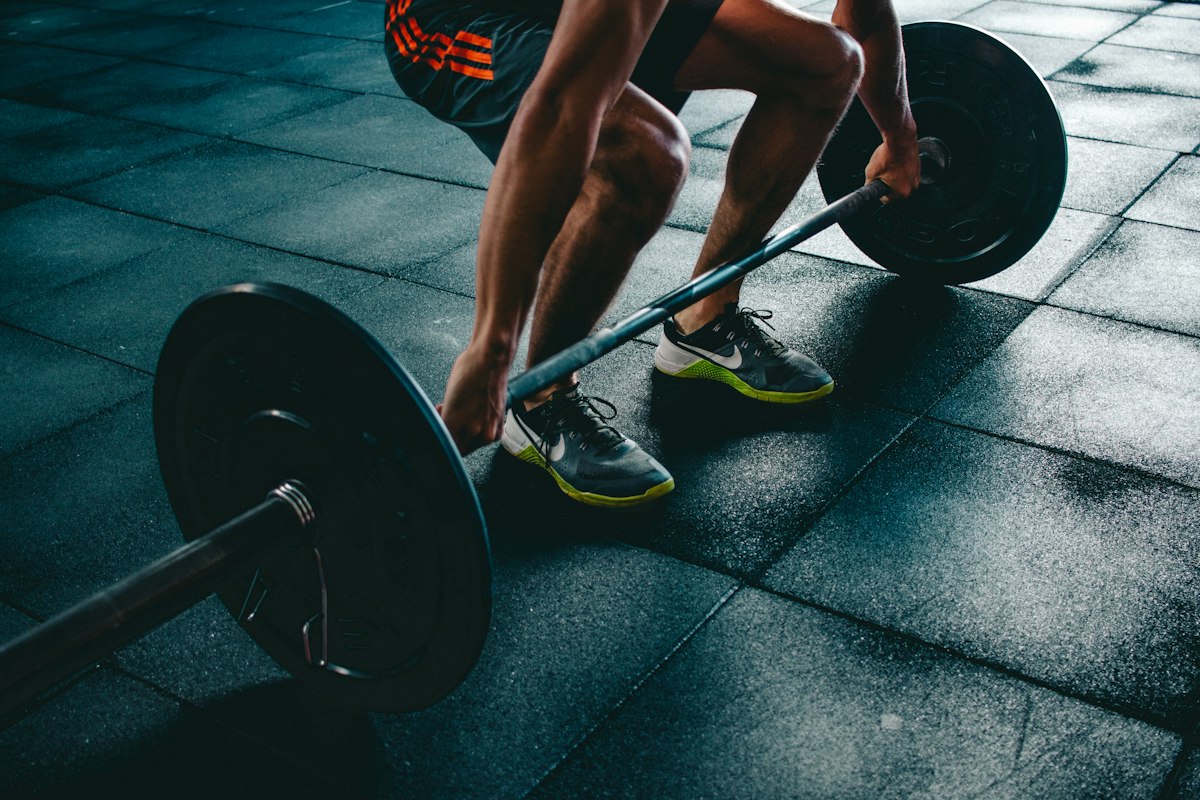
You can start strength training with literally nothing. But here's what's worth investing in over time:
Bare Minimum (Free or Under $50)
- A yoga mat or carpeted area
- Sturdy chair (for dips and step-ups)
- Doorway pull-up bar ($15-25) — major bang for buck
Beginner Home Setup ($50-200)
- 2 pairs of dumbbells (light and medium — 5/10/15 lb sets work great for most)
- Resistance bands (loop bands, $15-25)
- Yoga mat
Better Home Setup ($200-500)
- Adjustable dumbbells (Bowflex SelectTech or similar — $300-500 but replace 8 pairs)
- Kettlebell (one good 25-35 lb kettlebell)
- Pull-up bar
- Resistance bands
Gym Membership ($30-100/month)
If you want access to barbells, machines, and heavier weights as you progress, a basic gym membership is worth it. Planet Fitness, YMCA, and most local gyms are affordable.
Nutrition for Beginners: The Basics
You don't need a complicated diet. Just hit these four points:
1. Eat Enough Protein
Aim for 0.7-1g of protein per pound of bodyweight daily. For a 160 lb person, that's 110-160g of protein.
Good sources:
- Chicken breast, lean beef, fish
- Eggs (one of the best beginner foods)
- Greek yogurt and cottage cheese
- Beans, lentils, tofu (for plant-based)
- Protein powder if needed
2. Don't Skip Carbs
Carbs fuel your workouts. Aim for whole grains, fruits, vegetables, and starchy foods like rice, oats, and potatoes.
3. Eat Enough Calories
You can't build muscle if you're severely undereating. For most beginners, eating at maintenance (or a small surplus of 200-300 calories) is ideal. If you're trying to lose fat at the same time, keep protein high and create a modest 300-500 calorie deficit.
4. Hydrate
Drink water throughout the day. Aim for 3+ liters, more if you sweat a lot.
The Recovery Triangle: Sleep, Rest, Stress
Muscles don't grow during workouts. They grow when you recover. Skip recovery and your progress stalls.
Sleep 7-9 Hours
This is non-negotiable. Most muscle protein synthesis happens during deep sleep. Less than 7 hours and your body produces less growth hormone and recovers poorly.
Take Rest Days
Train the same muscles 2-3 times per week, never more. The 48 hours between sessions is when actual growth happens.
Manage Stress
Chronic stress raises cortisol, which breaks down muscle. Walks, meditation, time outdoors, or just downtime all help.
Common Beginner Mistakes
1. Lifting Too Heavy Too Soon
Ego lifting is how beginners get hurt. Start light. Master the form. Add weight gradually.
2. Skipping the Warm-Up
Even 5 minutes of light movement (walking, arm circles, bodyweight squats) reduces injury risk dramatically.
3. Doing Cardio First
If you do strength and cardio in the same session, do strength first when your energy is highest.
4. Inconsistency
Going hard for 2 weeks then taking a month off doesn't work. Three workouts per week, every week, for 3 months will produce more results than perfect workouts done sporadically.
5. Not Tracking Progress
Keep a simple notebook. Write down what weight you used, how many reps you got. This makes progression obvious and motivating.
6. Comparing Yourself to Advanced Lifters
That person at the gym lifting heavy started somewhere too. Your only competition is your past self.
7. Ignoring Form for Volume
Half-rep squats and bouncing curls don't count. Slow, controlled movements with full range of motion build more muscle than sloppy heavy lifts.
Frequently Asked Questions
How long until I see results?
Strength gains: 2-3 weeks. Visible muscle changes: 6-12 weeks. Significant transformation: 6+ months. Patience pays off.
Will I get bulky?
No — especially not as a woman. Building large amounts of muscle requires years of focused training and eating in surplus. Casual strength training makes you toned and strong, not bulky.
Should I do cardio too?
Yes, but not too much. 2-3 cardio sessions of 20-30 minutes per week, plus daily walks, is plenty alongside strength training.
How often should I change exercises?
Stick with the same program for at least 4-8 weeks. Switching too often prevents you from getting good at any one movement.
Is it safe for older adults?
Strength training is one of the best things older adults can do. Just start light and prioritize form. Check with your doctor if you have existing conditions.
Can I strength train every day?
No. Muscles need 48 hours to recover. 3-4 days per week is ideal for beginners.
Do I need protein shakes?
Not required. They're convenient, but you can hit your protein needs through whole foods alone.
What's the difference between dumbbells and barbells?
Dumbbells are great for home training and balance. Barbells let you lift heavier and progress faster but require more equipment. Start with dumbbells, add barbells later if you want.
Should I take supplements?
Most beginners don't need them. Protein powder is convenient but optional. Creatine monohydrate is the one supplement with strong research support — but even that isn't necessary for beginners.
The Bottom Line
Strength training intimidates a lot of people because it looks complicated from the outside. It isn't. Six basic movement patterns, 8-12 reps, 2-3 sets, three times a week, progressively adding challenge over time. That's the whole game for at least your first year.
You don't need a perfect program. You don't need expensive equipment. You don't need to know what creatine is. You just need to start, stay consistent, and gradually progress.
Pick three days this week. Do Workout A on day one. Walk on the rest days. Do Workout B on day three. Next week, repeat — but try to do one more rep or use slightly heavier weight on at least one exercise.
Six months from now you'll look back at this moment as the day you finally started. The version of you in a year is built by the decisions you make this week. Get started.